Skip to content

Hague International Design Application

Overview of the Hague International Design Application

What Is a Hague International Design Application?

 The Hague International Application is an international design application and registration system that allows you to file a single application with the WIPO International Bureau or the Japan Patent Office and obtain the same effect as if you had filed separate applications in each designated country. While it is possible to file a Hague application with the Japan Patent Office, currently about 80% of applications are filed using E-filing, which allows for online submission via the Internet to the WIPO International Bureau. Since there is no need to appoint a local agent when filing, costs can be kept lower.
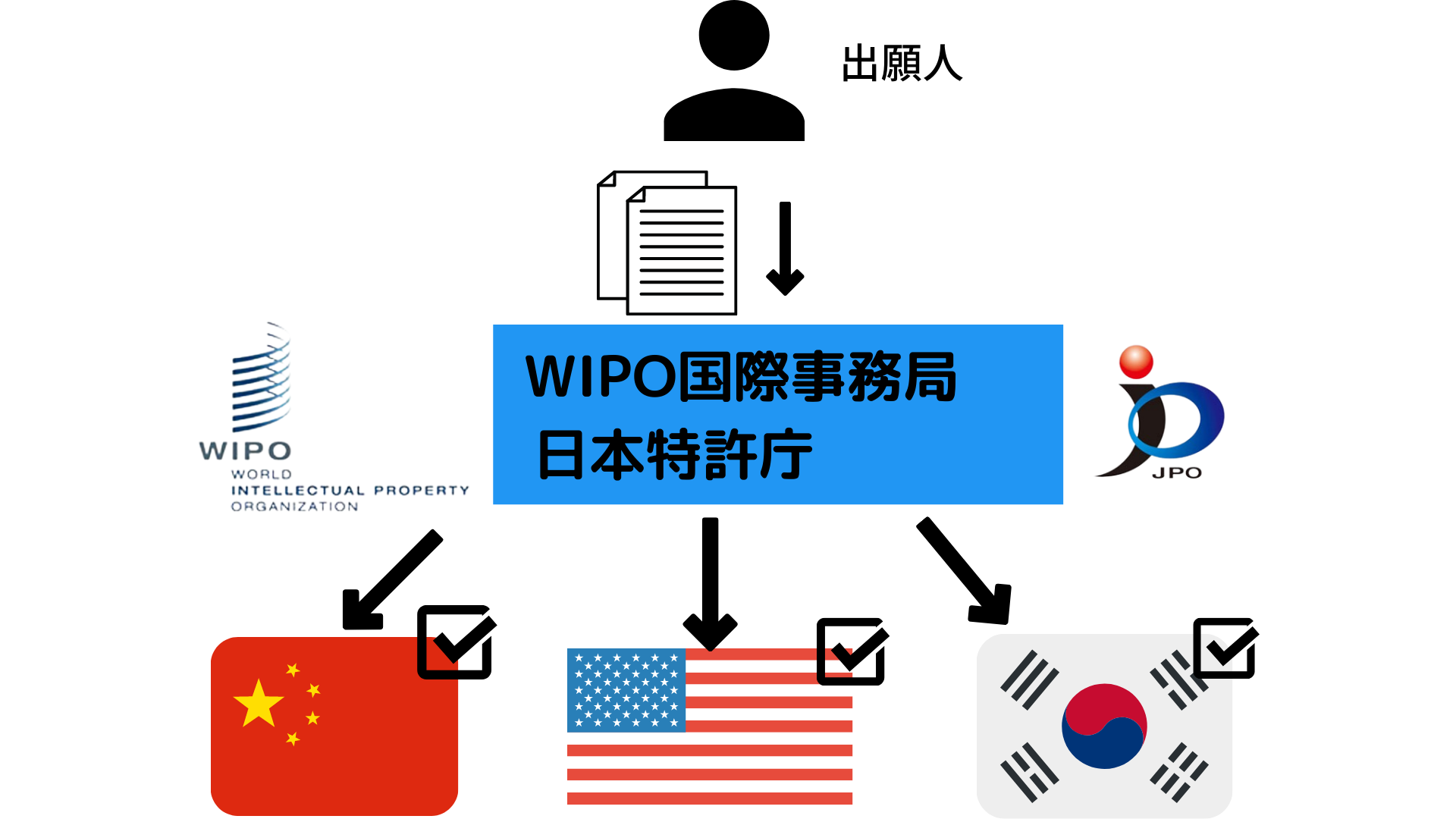
 

ハーグ意匠概要


What is a Direct Application?

 A direct application refers to filing a foreign design application with local agents in each country through a Japanese patent attorney or similar professional. A local agent is appointed for each country, and the application is prepared in the language of that country using its specific filing format. In particular, since the rules for drawing design drawings vary by country, design drawings compliant with each country’s requirements must be prepared. The primary advantage of a direct application is that the local agent can review and revise the design drawings.

ハーグ意匠概要


List of States Parties to the Geneva Conventions (Hague)

There are currently 75 contracting states to the Hague Agreement

 There are currently 75 contracting states to the Hague Agreement. Previously, because there were few Hague contracting states, the only way to obtain design rights abroad was to file a design application directly with the desired country. However, with Japan’s accession to the Hague Agreement, it has become easier and more cost-effective to file foreign design applications compared to the past.

 Since "Taiwan" is not currently a contracting party to the Hague Agreement, it is not possible to file a Hague international design application there. It is necessary to file a foreign design application directly with Taiwan.


Albania Spain Lithuania Singapore
Armenia Finland Latvia Slovenia
Azerbaijan France Morocco San Marino
Bosnia and Herzegovina Gabon Monaco Senegal
Bulgaria United Kingdom Moldova Suriname
Benin Georgia Montenegro São Tomé and Príncipe
Brunei Ghana North Macedonia Syria
Botswana Greece Mali Tajikistan
Benelux Office for
Intellectual Property (BOIP)
Croatia Mongolia Turkmenistan
Belarus Hungary Mexico Tunisia
Belize Israel Namibia Turkey
Canada Iceland Niger Ukraine
Switzerland Italy Norway United States
Côte d'Ivoire Jamaica African Intellectual Property Organization
(OAPI)
Vietnam
China Japan Oman Samoa
Germany Kyrgyzstan Poland  
Denmark Cambodia Romania  
Estonia North Korea (Note) Serbia  
Egypt South Korea Russia  
European Union Intellectual Property Office
(EUIPO)
Liechtenstein Rwanda  

(As of June 2022)

"Japan" is also eligible for Hague International Design Applications

It is also possible to designate Japan in a Hague International Design Application. In such cases, if a claim of priority under the Paris Convention is made, or if a claim for an exception to the loss of novelty is made, the relevant “certificates” must be submitted to the Japan Patent Office within the following time periods.

  1. Priority ................... Within 3 months from the filing date or the date of international publication 
  2. Exceptions to loss of novelty: Within 30 days of filing or international publication

 Benefits of Filing an International Design Application in The Hague


The Hague Application and Filing Documents

Simplification of the application process

Multiple Design Applications

You can prepare the application in English, and by filing a single set of documents, you can apply for design protection in all Hague Contracting States. Furthermore, you may include up to 100 designs, provided they are related.

Hague Application, Local Agent and Translation Fees

Reduction of indirect expenses

No need for local agent appointment fees or translation costs

You can file a Hague International Design Application in a country without appointing a local representative. Since there is no domestic conversion procedure, as with patents, no translation costs are incurred. However, if you need to respond to a notice of refusal or conduct other proceedings directly with the office of a designated Contracting State, you will need to appoint a local representative separately.

Hague filing and centralized management

Simplification of Rights Management

Rights under international registration are centrally managed by the WIPO International Bureau

All applications related to five-year renewals and changes to international registrations (such as changes in ownership, abandonment, or name changes) can be handled through a single procedure with the WIPO International Bureau, eliminating the need to file directly with individual countries.

Comparison of Direct Applications and Hague International Design Applications

Local Agent

 With a Hague International Design Application, you can file a foreign design application without appointing a local representative. However, if an Office Action (notification of refusal) is issued, you must appoint a local representative.

Application Formats and Drawing Rules

 The application must be prepared in the local language and in accordance with local filing requirements. Drawings must be prepared in accordance with the drawing rules of each country. Since drawing rules may differ from those in Japan depending on the country, it is necessary to prepare drawings that comply with the specific drawing rules of that country.

Renewal

 Procedures such as renewal of rights can be handled collectively through the WIPO International Bureau. There is no need to engage a local agent in each country.

  Direct Filing Hague International Design Application
Language Languages English, French, Spanish
Forms National Forms Standardization
Drawing Rules Country-specific rules

Country-Specific Rules

*Some exceptions apply

Local Agent Required

Generally not required

*Required when handling OA

Renewal Each country Batch processing via WIPO
Transfer of ownership, withdrawal, etc. Each country Centralized Procedures via WIPO


*When responding to an Office Action: If grounds for refusal are notified, it may be necessary to appoint a local agent.

List of Exceptions to the Loss of Novelty in Design

Exceptions to Loss of Novelty by Country

In Japan, it is now sufficient to file an application within one year of the loss of novelty, but in some countries, a design application must be filed within six months.

Requirement for Submission of Certificates

While some countries, such as the United States, do not require a certificate, others, such as Japan, do require one.

Limits on Actions

In Japan, the exception to loss of novelty applies to acts attributable to the design registrant, such as sales, social media posts, and exhibition entries. However, some countries have stricter regulations, such as limiting the exception to entries in exhibitions certified by the government of that country.


Design Exemption Period for Loss of Novelty Certificate Limitation of Acts
Japan 1 year Required None
United States 1 year Not required None
China 6 months Required Limited
Europe 6 months Required Limited
South Korea 1 year Required None
Taiwan 6 months Required None
India 6 months Not required Limited
Russia 1 year Not required None


List of Countries with and without Substantive Examination

Countries Without Substantive Examination

 While substantive examination is standard practice for Japanese designs, some countries adopt a system where only formalities are examined, and registration is granted without substantive examination. Below is a summary of countries that conduct substantive examination and those that do not.


  Substantive Examination
Japan Yes
United States Yes
China None
Europe None
South Korea

Available

Partially no credit check

Taiwan Available
India Available
Russia Available
United Kingdom None
Vietnam None
Mexico Available
Thailand Available


RELATED

Other Topics on International Applications

Learn about the international application system and global intellectual property systems

← Return to International Applications