.png?width=500&height=250&name=%E7%9F%A5%E7%9A%84%E8%B2%A1%E7%94%A3%E4%BA%8B%E5%8B%99%E6%89%80%E3%82%A8%E3%83%9C%E3%83%AA%E3%82%AF%E3%82%B9%20(500%20%C3%97%20250%20px).png)

Hello, my name is Takefumi Sugiura and I am a patent attorney. This time, we will explain in detail...
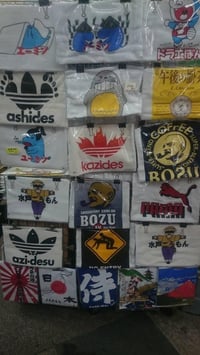 Have you ever seen a uniquely designed T-shirt or towel while traveling? These designs that will make you chuckle are what are called parody products.
Parody is a method of imitating an existing famous work while adding satire or humor to create a new expression. For a parody to be successful, the existence of the original material is a prerequisite, but the risk of violating intellectual property rights (particularly trademark rights and copyrights) is therefore very high.
In this article, we will explainthe risks and illegality of parody trademarks based on the relationship between parody trademarks and intellectual property rights, and court precedents (Frank Miura case and KUMA case).
Table of Contents
Relationship between parody trademarks and trademark rights
When we hear the word parody, we tend to think that it is closely related to copyright, but it is also closely related to trademark rights.
Problems with parody trademarks
- In principle, registration of parody trademarks is not allowed (Japan Patent Office examination standards)
- Using parody trademarks carries a high risk of trademark infringement
- Causes damage to brand value (dilution/free riding)
In the world of trademarks, parody trademarks are generally not allowed to be registered. Furthermore, if you use a parody trademark in your business, you are at a very high risk of being sued for trademark infringement (there is also a risk of violating unfair competition prevention laws).
Parody trademark infringement risk|Two cases learned from court precedents
Case 1: Frank Miura Incident (2015)
Litigation over the validity of trademark registration
This case involved a dispute over whether the trademark ``Franck Miura'' is similar to the luxury watch brand ``Franck Muller.''
| Issues | Judgment result |
|---|---|
| Similarity of trademarks (Article 4, Paragraph 1, Items 10 and 11) | Dissimilar judged |
| Possibility of confusion (Article 4, Paragraph 1, Item 15) | No chance of confusion |
| Illegal purpose (Article 4, Paragraph 1, Item 19) | No illicit purpose |
Court's decision: It was determined that "Frank Miura" is a satirical design and is unlikely to be confused with the Franck Muller brand, and the trademark registration was valid.
What this judgment means
- Parody trademarks can be registered if they can be clearly distinguished from the original brand
- However, trademark infringement and unfair competition prevention laws are separate issues (just because it is registered does not mean it can be used freely)
Trademark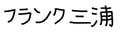
Cited trademark 1 Franck Muller
Cited trademark 2
Cited trademark 3
Case 2: KUMA incident (2012)
Case where trademark registration was recognized as invalid
This is a case in which the trademark "KUMA", which is very similar to the sports brand "PUMA", was registered by the Japan Patent Office, but PUMA filed an opposition and the trademark was invalidated.
| Issues | Judgment result |
|---|---|
| Similarity of trademarks (Article 4, Paragraph 1, Item 15) | Determined to be similar |
| Trademark free riding/damage to trust (Article 4, Paragraph 1, Item 7) | Certified brand dilution |
Court's decision: The trademark registration of "KUMA" was invalidated because it was recognized that the purpose was "free riding" and "damaging (diluting) the brand's credibility" by taking advantage of PUMA's brand recognition.
What this judgment means
- If parody trademarks are judged to be similar, the registration is likely to be invalidated
- If damage to brand credibility (dilution/free riding) is recognized, trademark registration will be canceled
Trademark

Cited trademark

Three risks of parody trademarks
Legal risks of using parody trademarks
- Possibility of trademark infringement (Trademark law violation)
- Damage of brand value (dilution, free ride, pollution)
- High risk of litigation (getting into unnecessary trouble)
In particular, the more well-known the brand, the more likely it is to become a target for parody, so it is important for companies to conduct regular trademark searches and issue a warning if they find an unauthorized parody trademark.
Why you should not use parody trademarks (summary)
| Item | Frank Miura Incident | KUMA incident |
|---|---|---|
| Trademark registration | Enabled (Registration maintained) | Invalid (cancellation of registration) |
| Possible brand damage | Low (emphasizes satire/humor) | Expensive (free riding on brand trust) |
| Intellectual property risk | Low | High (both the patent office and the court judged it invalid) |
Conclusion: Although parody trademarks may be allowed to be registered as trademarks, their use in business should be avoided as the risk of trademark infringement and brand damage is extremely high.
Corporate intellectual property strategy | Measures against parody trademarks
If you find a parody trademark
- Perform trademark searches and warn against unauthorized trademark use
- Considering trademark registration opposition/litigation as necessary
- Properly manage trademark rights to protect brand value
Consult with an intellectual property expert
Parody trademarks are a very gray area, so it is important to seek professional advice.
Intellectual property firm EVORIX
We provide consultation on trademark research, rights enforcement, and brand protection. Please feel free to contact us.

AUTHOR
Takefumi SUGIURA (杉浦 健文)
EVORIX Intellectual Property Law Firm Managing Patent Attorney
Supports clients across IT, manufacturing, startups, fashion, and medical industries, covering patent, trademark, design, and copyright filings through trials and infringement litigation. Specialized in IP strategy for AI, IoT, Web3, and FinTech. Member of the Japan Patent Attorneys Association (JPAA), Asian Patent Attorneys Association (APAA), and Japan Trademark Association (JTA).