.png?width=500&height=250&name=%E7%9F%A5%E7%9A%84%E8%B2%A1%E7%94%A3%E4%BA%8B%E5%8B%99%E6%89%80%E3%82%A8%E3%83%9C%E3%83%AA%E3%82%AF%E3%82%B9%20(500%20%C3%97%20250%20px).png)


Most trademark refusals issued by the Japan Patent Office (JPO) — including Provisional Refusals...
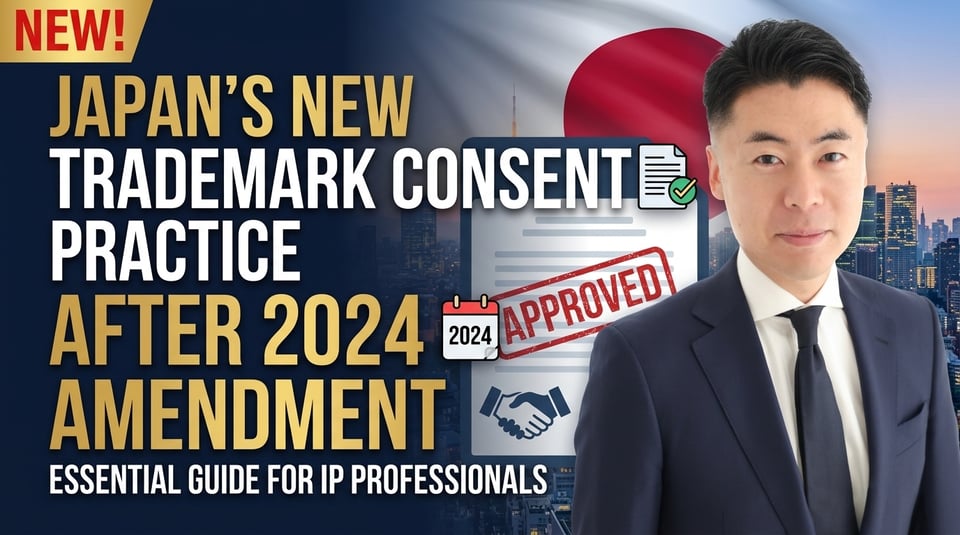
Effective April 1, 2024, the Japan Trademark Act introduced a Letter of Consent (LoC) system under Article 4(4), bringing Japan in line with most major jurisdictions. This article explains how the LoC works in practice, what the JPO requires for acceptance, and how foreign counsel can leverage the new system to overcome Article 4(1)(11) refusals.
Table of Contents
1. What Changed in April 2024
Before April 2024, a written consent from a prior right holder was not a basis to overcome an Article 4(1)(11) prior mark refusal in Japan. Foreign counsel were often surprised — and frustrated — that consent that worked in their home jurisdiction had no effect at the JPO.
The 2024 amendment introduced Article 4(4), which provides that Article 4(1)(11) does not apply where:
- The applicant has obtained the prior right holder's consent, AND
- There is no likelihood of source confusion between the two marks
Critical nuance: Japan's LoC is not a "true" consent regime. The consent alone is insufficient. The applicant must also demonstrate to the JPO that no source confusion will result.
2. JPO Acceptance Criteria
In examining a LoC submission, the JPO considers:
- Distinctiveness of the marks: Highly distinctive marks support coexistence more easily
- Trade channels: Different distribution channels reduce confusion
- Geographic scope: Distinct geographic territories support coexistence
- Customer base: Different consumer demographics or industries
- Use history: Prior coexistence without confusion in Japan or other jurisdictions
- Protective measures: Disclaimers, distinguishing marketing, separate logo elements
A bare consent ("we agree to your registration") will not succeed. The submission must build a fact-based case that confusion is unlikely.
3. What an Effective Letter of Consent Includes
EVORIX's standard LoC includes the following components:
- Identification: Both parties (legal entity, address, role)
- Mark details: Both marks, registration/application numbers, goods/services
- Express consent: Prior right holder's unconditional consent to the new application
- Non-confusion factual basis: Detailed explanation of why no source confusion will result
- Coexistence terms (optional): Practical arrangements (e.g., different logo styles, separate marketing channels, disclaimer language)
- Signatures: Authorized signatories of both parties, with dates
Submitted to the JPO with a Japanese translation if executed in another language. We provide a Japanese translation as part of the engagement.
4. Coordinating with the Prior Right Holder
Foreign counsel may not have direct contact with the Japanese prior right holder. EVORIX handles outreach in three modes:
| Mode | When Used |
|---|---|
| Direct outreach | Prior right holder is a Japanese company or individual without foreign counsel |
| Foreign-counsel coordination | Prior right holder is foreign with overseas counsel — we coordinate via your firm |
| Anonymous initial contact | Where the applicant prefers not to disclose identity initially (subject to ethics rules) |
5. Typical Cost and Timeline
EVORIX's LoC service typically costs JPY 80,000 – 150,000 for drafting and filing. This includes:
- Strategy consultation and feasibility assessment
- LoC drafting in Japanese and English
- Up to two rounds of revisions per party
- Coordination with prior right holder (mode varies)
- Filing with the JPO and follow-up communication
Timeline depends on counterparty cooperation. Cooperative counterparties resolve in 2-4 weeks; uncooperative or hesitant ones may require 2-3 months. We typically request a JPO response deadline extension to allow time for coordination.
6. Strategic Considerations
Use the LoC route when:
- The cited mark's owner is identifiable and reachable
- Marks share clear distinguishing factors (logos, channels, geography)
- No business conflict exists or can be resolved commercially
- Pure dissimilarity arguments are weak
Avoid the LoC route when:
- The prior right holder is a direct competitor with active commercial conflict
- The marks are essentially identical with overlapping markets
- The prior right holder has signaled enforcement intent
- Time pressure is severe and counterparty is unresponsive
Frequently Asked Questions
Related Articles
RELATED ARTICLE
Top 5 Reasons for Trademark Refusals in Japan and How to Overcome Them
The five most common JPO refusal grounds with response strategies.
RELATED ARTICLE
Article 4(1)(11): Strategies to Argue Non-Similarity in Japan
Effective non-similarity arguments under Article 4(1)(11).
RELATED ARTICLE
Responding to a JPO Provisional Refusal: A Practical Guide for Foreign Counsel
Step-by-step guide for foreign attorneys handling a JPO refusal.
RELATED ARTICLE
Response to Madrid Refusal in Japan: Complete Guide (Deadlines & Options)
What happens after the JPO issues a provisional refusal under Madrid.
FOR FOREIGN COUNSEL
Need to respond to a JPO Provisional Refusal?
EVORIX provides specialized JPO Office Action response services for foreign counsel. Free assessment + fixed quote within 3-5 business days.
Related Articles
- Responding to a JPO Provisional Refusal: A Practical Guide for Foreign Counsel
- Top 5 Reasons for Trademark Refusals in Japan and How to Overcome Them
- Response to Madrid Refusal in Japan: Complete Guide (Deadlines & Options)
- Cost Estimate: Japan Trademark Office Action Response (2026 Update)
- Article 4(1)(11): Strategies to Argue Non-Similarity in Japan
- Japan Trademark Prosecution Timeline
- Letter of Consent in Japan: Practice After the 2024 Amendment
- Working with a Japanese Trademark Attorney: What Foreign Counsel Should Know